Enter the lush vegetation of the Yucatan forest, where one of the most important abandoned cities in the history of Mexico and Latin America emerges, glorious and imposing: Chichen Itza, the most powerful settlement of the entire Mayan empire by the end of the Classic Period and the beginning of the Postclassic Period. It was between 600 and 900 AD that this site became one of the major political centers of the Mayab region. This fascinating archaeological area was recognized in 1988 as a World Heritage Site, and the Temple of Kukulcan as one of the new seven wonders of the modern world. What are you waiting for to come and enjoy the mysterious Mayan world?
Chichen Itza, founded in the year 525 AD, was established by the Bacalar chanes as “the capital of the Government.” The architectural works of art are the greatest testimony to the significant development achieved by the Mayans in architecture, calculation, engineering, and astrology. When you visit this city, which will take you on a journey back in time, you can’t help but ask yourself: how was it possible for them to build an empire with these characteristics?
In its heyday, this Mayan city had more than 50,000 inhabitants, and today, the descendants of the wise people who inhabited these sacred lands still continue to live there. Perhaps ball games are no longer played, and the sacred cenote is no longer used for offerings, but what persists is this ancestral ability to turn raw materials into art: between carvings and weavings, discover how the inhabitants of Chichen Itza express themselves!
It is said that Ixchel, the Goddess of Love and Fertility, bestowed the gift of weaving upon Mayan women. In their garments, one could see depictions of different sacred gods, the same ones that had been crafted in ceramics to be worshipped and to decorate the sacred temples.
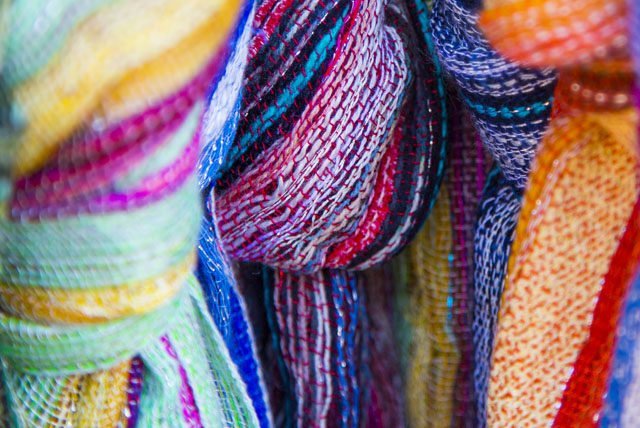
Mayan textiles are truly works of art that combine design, quality, and exclusivity. Bold colors like reds, greens, yellows, violets, blues, and pinks perfectly complement huipiles, ruanas, shawls, nets, and coats. Unlike the garments used by many other ancient peoples, those of the Mayans have the unique characteristic of incorporating mystical and religious figures. Each piece of clothing tells a story, a celestial confrontation, and a passage to the underworld; this characteristic is what makes Mayan textiles unique in the world. A must-have souvenir? A hammock. Did you know that hammocks were widely used because, unlike a bed, they allowed ventilation to pass through?
In Chichen Itza, you will also find all kinds of Mayan handicrafts. Ceramic objects, wooden artifacts, jewelry, and much more.
Enjoy discovering the unique aspects that remain alive from this important civilization—a culture that cannot be silenced even after passing through dozens of centuries. Come and discover how the descendants of the wise Mayans live in Chichen Itza!
Portuguese Versión: Entre lavrados e tecidos, descubra como se expressam os habitantes de Chichen Itza