O Dia dos Mortos is one of the most important popular festivals in Mexico. From the last days of October until November 1 and 2, the country receives the visit of those who no longer belong to the earthly plane and come to land to enjoy the pleasures of life and the company of their loved ones.
The visit and decoration of cemeteries, the creation of altars in homes, serenades, the lloronas, and gatherings in cemeteries cease to be extraordinary practices to become common rituals that fill the streets of the country with joy, nostalgia, and humor.
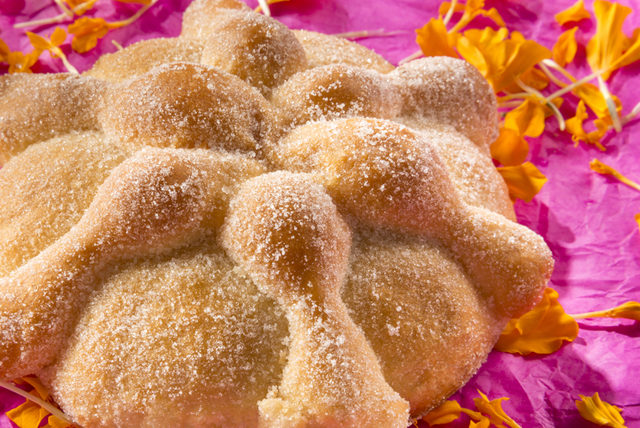
Undoubtedly, in each state, the celebration acquires particular nuances, but there are some traditions that can be considered Mexican in every sense of the word, regardless of which state or municipality it takes place: the Pão de Morto, an inevitable item from north to south and from east to west. What is it? A small offering for the dead and a typical culinary product of the date, so that the living may also benefit.
The Pão de Mortos is an offering full of tradition in Mexico. Its preparation may vary depending on the latitudes, but it is a product that can never be absent. In some states, it is made with added sugar, in others, with flavors of vanilla and orange, and in some cases, covered in chocolate. The most typical is the round bread on which the same dough or egg yolk cream is spread, representing the bones.
Like many local cultural practices, the Pão de Morto also has fused origins. Yes, of course! Fusions resulting from the encounter of indigenous or Mesoamerican cultures with the traditions of the ancient continent.
This delicacy is inspired by ancient pre-Hispanic rituals. Some historians claim that the human sacrifices typical of the sixteenth century are its main inspiration. What specifically? The offering of a princess to the gods. Her heart was extracted from her body and, still beating, was placed in a pot with amaranth. Then, the one leading the ritual had to bite the heart as a sign of gratitude to the deities.
Other historians assert that pre-Hispanic civilizations made a special bread composed of amaranth seeds, which was mixed with the blood of human sacrifices that also served to Izcoxauhqui, Cuetzaltzin, or Huehuetéotl.
It is believed that the Spaniards proposed a modification of this type of sacrifice; thus, they made wheat breads shaped like hearts coated in red-dyed sugar to simulate the blood of maidens before the sacrifice.
There are many mysteries that linger over ancestral practices that making a single statement would be rather risky. What can be stated is that this bread was and is one of the most traditional offerings of the Day of the Dead, which you cannot miss trying during your visit to Puerto Vallarta during these dates.
Portuguese Versión: Pão de Morto: uma oferenda repleta de tradição no México