Of all the destinations in the Mexican Caribbean, Isla Mujeres is one of the most paradisiacal and sought-after by those looking for the calm of the sea and the Caribbean atmosphere as the best place to relax during their vacation.
This piece of land, located very close to the city of Cancún, spans eight kilometers in length and half a kilometer in width, making it a dream destination for many. Whether exploring Cancún or another destination in the Riviera Maya, a visit to Isla Mujeres is a must.
What can you do on a trip to Isla Mujeres? If you think the only thing you can enjoy here is the beach, you’re mistaken, as there are many other attractions and activities to experience.
One of these is a visit to the Turtle Farm, also known as the “tortugranja,” a place specifically created to provide protection for the sea turtles inhabiting this region, which are critically endangered.
Each season, between the months of May and September, sea turtles choose Isla Mujeres to lay their eggs. However, the reality is that these animals are hunted for their meat, eggs, and shells. For this reason, the farm was established to protect turtles and their future offspring, preventing them from being poached.
The “tortugranja,” created under Federal Law, aims primarily to preserve the eggs. When the turtles hatch, some are raised in nurseries while others are released to continue their life cycle.
How did this ecological project in Isla Mujeres begin? It originated in the 1960s and 1970s, thanks to the work of Don Gonzalo Chalé, who began working with artificial incubation, positioning Isla Mujeres as a pioneer in the preservation of species, particularly sea turtles.
When visiting this turtle farm, you’ll find an aquarium home to various species of different sizes. Some are very small, such as newborn turtles, while others are quite large, measuring up to half a meter in length.
At the tortugranja, turtles are raised in wire cages to protect the eggs, significantly increasing their chances of survival. Additionally, it is estimated that the turtles born on this farm are very likely to return, ensuring that their offspring receive the same special care.
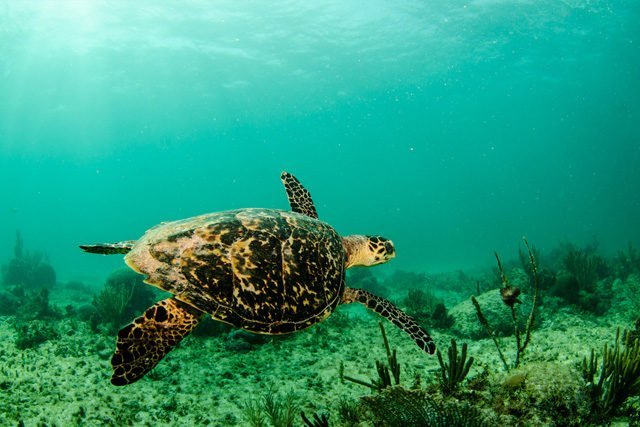
There are three species of sea turtles that frequent this area: the Hawksbill Turtle, Loggerhead Turtle, and the White Turtle, also known as the “green” turtle.
If you wish to visit this preservation and protection farm for sea turtles, you can do so every day from 9 a.m. to 5 p.m. It’s a worthwhile experience that allows you to learn more about these endangered animals. Visit the Turtle Farm during your trip to Isla Mujeres!
Portuguese Versión: Conheça a Fazenda de Tartarugas em seu passeio por Isla Mujeres